Soapberry Care matters when buyers want plant-based washing, personal care, and household cleaning products but worry that “natural” claims may hide weak manufacturing control. That risk becomes bigger when a supplier cannot explain raw material processing, formulation, packaging, and inspection. I believe the solution is to evaluate the full soapberry production path, not just the ingredient story.
Soapberry Care is a Shandong, China-based manufacturer of soapberry plant-based laundry, personal care, and household cleaning products. The factory has 8 years of manufacturing experience, an 86-person team, and capabilities covering soapberry processing, product formulation, OEM/ODM customization, sample testing, trial orders, packaging, and export document support for B2B buyers.
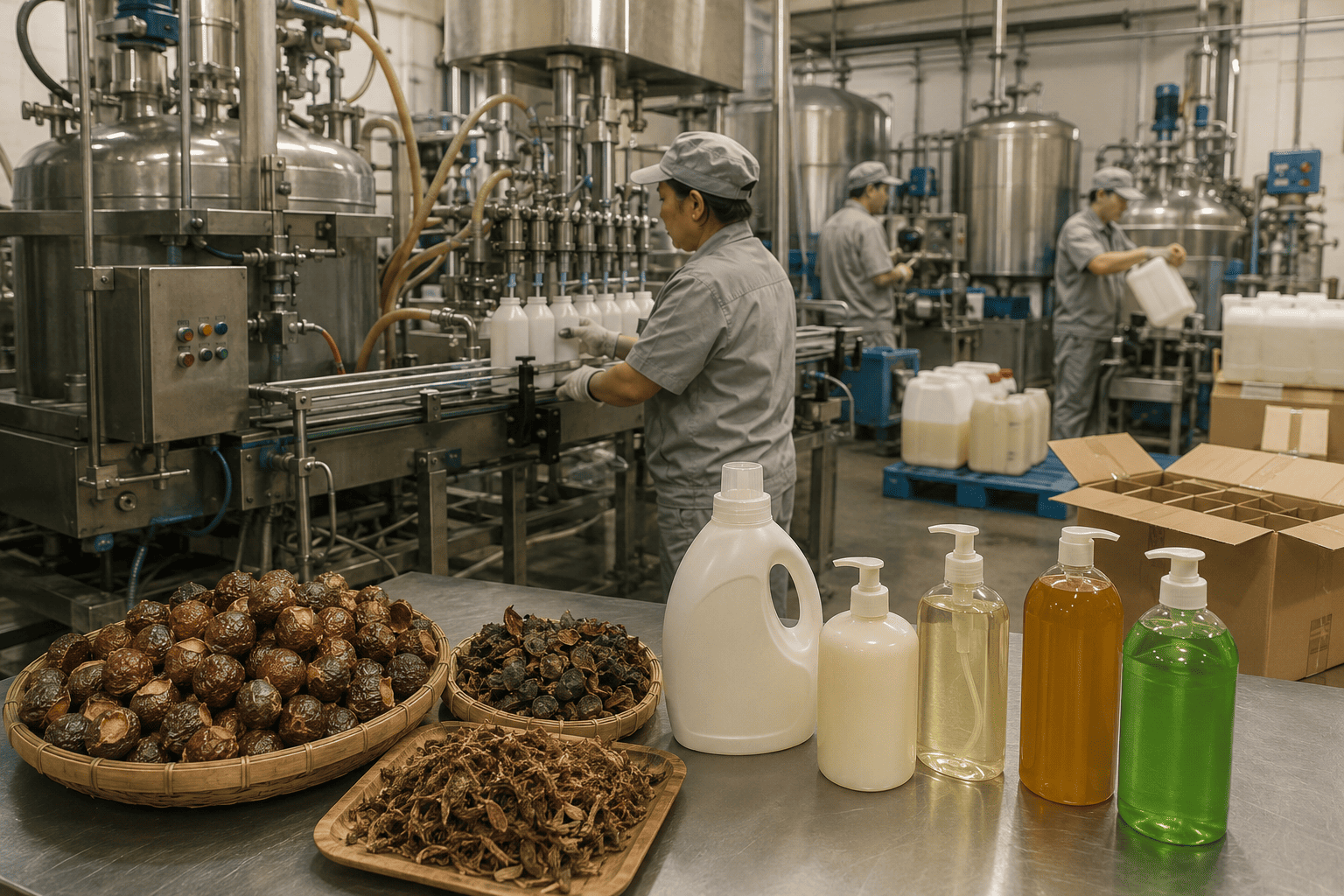
Many buyers first ask whether soapberry extract is “good.” I think the better question is whether the factory can turn soapberry extract into stable, sellable, category-specific products. Below, I explain how I would evaluate Soapberry Care from a procurement, product development, and supplier selection point of view.
What Is Soapberry Care and Why Should B2B Buyers Evaluate It Carefully?
Plant-based products are attractive, but they can also create confusion for importers and private label buyers. A supplier may talk about botanical ingredients, but buyers still face practical risks: unstable formulas, poor packaging, weak labeling, and limited production support. Soapberry Care should be assessed as a manufacturing partner, not only as a natural product concept.
Soapberry Care is a soapberry-based daily care product manufacturer in Shandong, China. It produces laundry care, personal care, oral care, kitchen cleaning, and household cleaning products using soapberry extract as a core ingredient concept. B2B buyers should evaluate its raw material processing, formulation capability, quality control, customization options, and document support before placing orders.
The real value is the manufacturing chain
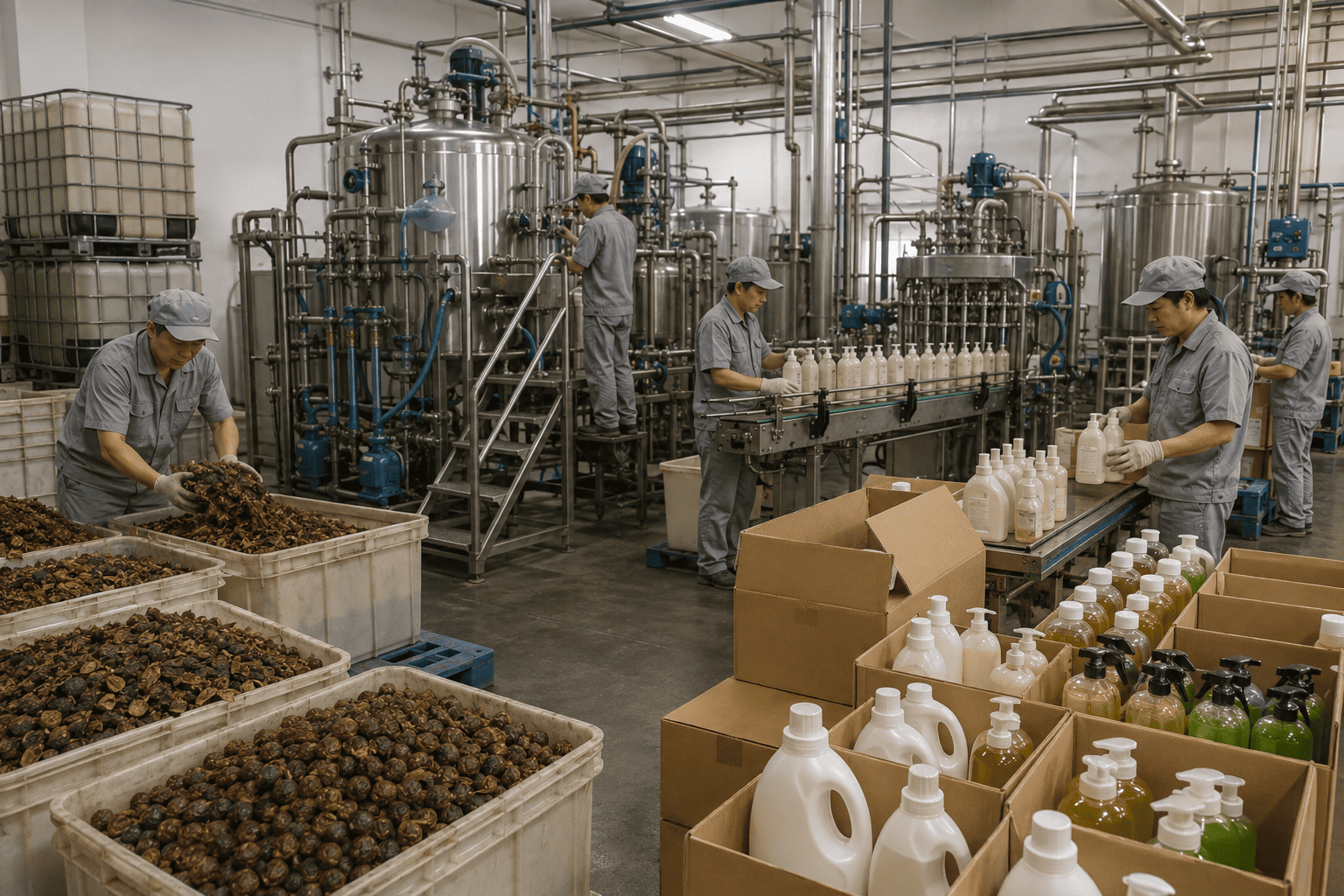
I often see buyers focus too much on one phrase: soapberry extract. That phrase is important, but it is not enough. A finished laundry detergent or shampoo depends on many linked steps. If one step is weak, the final product may not meet buyer expectations.
Soapberry Care’s manufacturing story begins with soapberry plant material and continues through:
- Soapberry variety and planting involvement
- Raw material crushing
- Extraction
- Flocculation
- Filtration
- Further processing
- Formula blending
- Filling and sealing
- Labeling and packaging
- Finished product inspection
This matters because B2B buyers are not only buying an ingredient. They are buying a commercial product that must survive transport, shelf display, consumer use, and repeat ordering.
Why “plant-based” should be treated as a capability
I prefer to treat “plant-based” as a manufacturing direction rather than a slogan. A plant-based product still needs controlled production. It also needs a formula direction that matches the product category.
For example, a baby laundry detergent and a kitchen cleaner cannot be evaluated in the same way. A shampoo and a dishwashing liquid may both use a plant-based concept, but their user expectations are different.
| Product Type | Buyer Concern | What I Would Check |
|---|---|---|
| Baby laundry detergent | Mild positioning, residue, odor | Formula direction, ingredient list, testing options |
| Shampoo | Hair feel, fragrance, viscosity | Sample performance, formula stability, packaging |
| Dishwashing liquid | Cleaning feel, foam, degreasing | Product positioning, use test, bottle sealing |
| Toothpaste | Oral care suitability | Ingredient review, market document needs |
| Kitchen cleaner | Practical cleaning use | Application testing, packaging strength |
The buyer risk behind a weak supplier
A weak plant-based supplier may offer a nice label but fail in execution. I would watch for these warning signs:
- The supplier cannot explain how soapberry extract is processed.
- The supplier only talks about “natural” but not formula direction.
- The supplier does not support samples before bulk orders.
- The supplier cannot adjust bottle size, fragrance, label language, or carton design.
- The supplier gives vague answers about inspection and shipment packaging.
Soapberry Care’s positioning is stronger when it shows buyers the full route from soapberry source to finished product. For procurement teams, that route is more useful than a broad “green product” claim.
> I would never advise a buyer to accept a plant-based product only because it sounds clean. I would advise them to request samples, review documents, test packaging, and confirm whether the product matches the target market.
How Does Soapberry Care Turn Soapberry Extract Into Finished Products?
Soapberry extract sounds simple, but the production path is not simple. Buyers may assume the extract alone creates product value. That assumption can lead to poor supplier selection. Soapberry Care should be judged by how it converts soapberry plant material into controlled formulas, packaged goods, and repeatable daily care products.
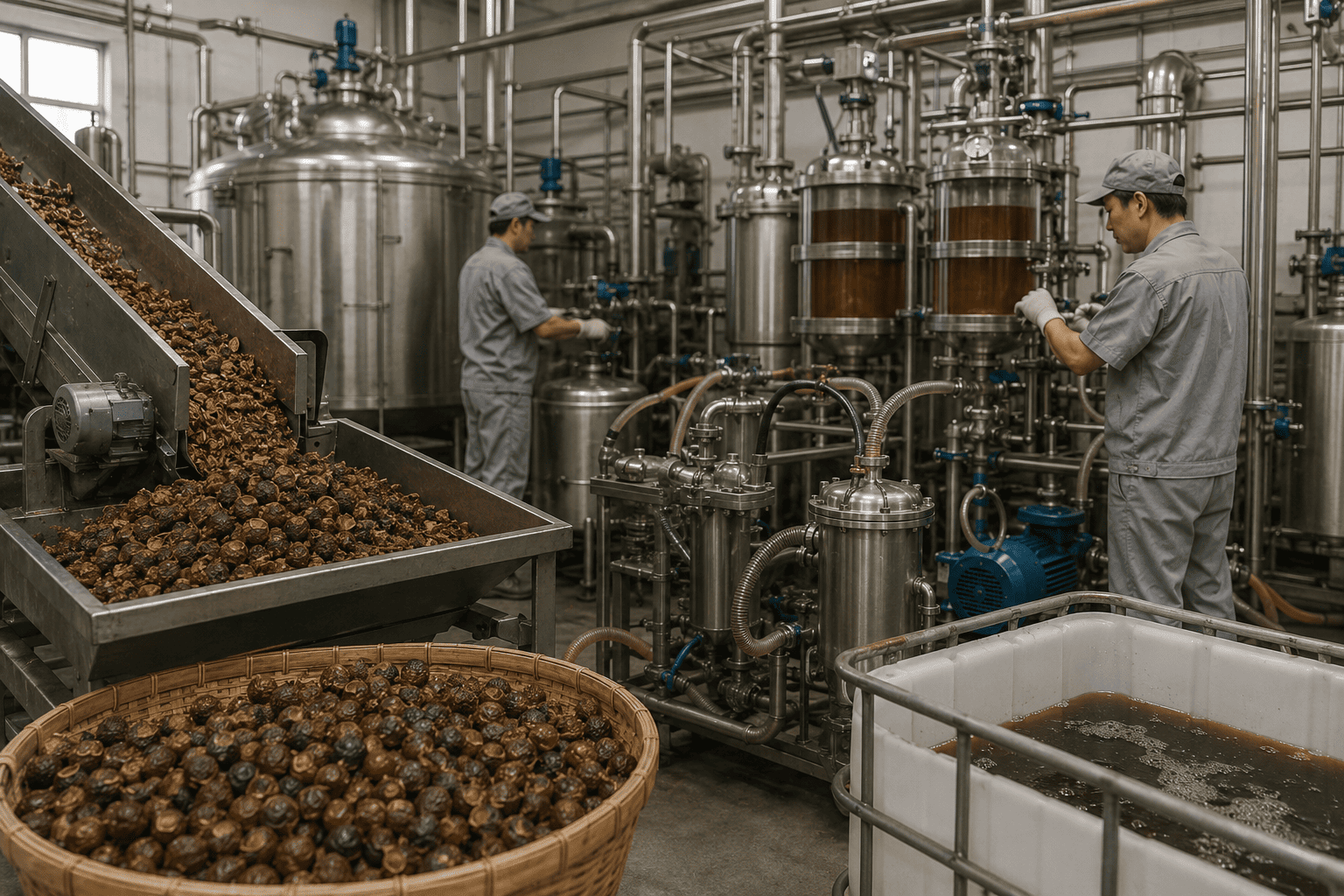
Soapberry Care processes soapberry plant material through crushing, extraction, flocculation, filtration, and further formulation. The extract then becomes part of finished products such as laundry detergent, baby laundry detergent, shampoo, body wash, dishwashing liquid, foaming hand wash, toothpaste, and kitchen cleaners. Buyers should check both ingredient processing and finished product control.
Soapberry extract is only one part of performance
I like soapberry as a product concept because it gives buyers a clear botanical story. However, I do not treat the extract as a magic answer. The final product depends on the full formula.
For example, a laundry detergent buyer may care about:
- Washing feel
- Fragrance direction
- Foam level
- Color and appearance
- Viscosity
- Bottle compatibility
- Label claims
- Carton strength
- Leakage prevention
- Market positioning
A shampoo buyer may care about different points:
- Hair feel after rinsing
- Fragrance retention
- Texture
- User experience
- Bottle pump or cap choice
- Microbiological testing requirements
- Ingredient list review
The same soapberry extract concept can support both categories, but each product needs its own development logic.
The processing workflow buyers should understand
Soapberry Care’s stated workflow includes several stages. Each stage reduces a different buyer risk.
| Stage | What Happens | Buyer Risk Reduced |
|---|---|---|
| Crushing | Soapberry plant material is prepared for extraction | Inconsistent raw material use |
| Extraction | Active plant-based components are drawn out | Weak ingredient control |
| Flocculation | Unwanted suspended matter can be separated | Poor clarity or instability |
| Filtration | Liquid is further cleaned and refined | Visual defects and sediment risk |
| Formulation | Extract is combined into finished product systems | Poor product performance |
| Filling | Finished product is placed into bottles or packs | Incorrect capacity or contamination risk |
| Sealing | Bottles are closed for shipment and use | Leakage risk |
| Labeling | Product information and branding are applied | Retail and compliance issues |
| Packaging | Cartons and export packs are prepared | Transport damage risk |
| Inspection | Finished goods are checked before shipment | Quality dispute risk |
Why flocculation and filtration matter
Many buyers do not ask about flocculation or filtration. I think they should. Plant-derived materials can vary in color, odor, sediment, and appearance. These details affect consumer perception, especially in personal care and household cleaning categories.
A buyer may accept slight natural variation in a botanical-positioned product. However, supermarkets, distributors, and e-commerce sellers still need consistency. If one shipment looks different from the next, customer complaints may increase.
Formula direction must match the market
Soapberry Care can adjust production and specifications according to customer requirements. That customization is useful, but buyers should be specific. I would advise buyers to define product direction before requesting a sample.
Useful sample brief details include:
- Target country or region
- Product category
- Bottle size
- Fragrance preference
- Private label or neutral packaging
- Positioning, such as family care, baby laundry, or kitchen cleaning
- Expected retail channel
- Label language
- Required documents
- Trial order quantity expectations
This type of brief helps a manufacturer provide a more relevant sample. It also helps buyers compare suppliers fairly. If one supplier receives a detailed brief and another receives only a product name, the comparison will not be useful.
Which Products Can Soapberry Care Manufacture for OEM/ODM Buyers?
Many buyers want a plant-based supplier, but they also need enough SKU range to build a full product line. If a factory only makes one item, the buyer may need several suppliers. Soapberry Care reduces that sourcing complexity by offering multiple soapberry-based washing, personal care, and household cleaning categories.
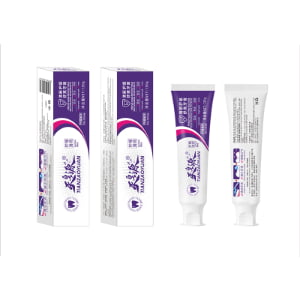
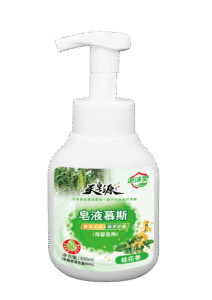
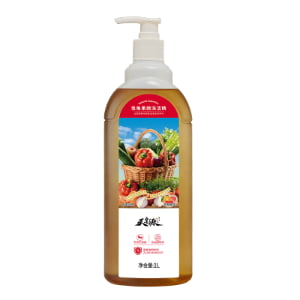
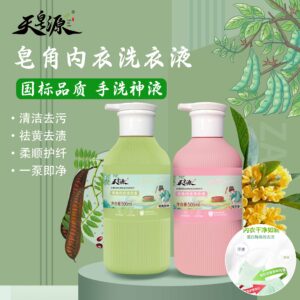
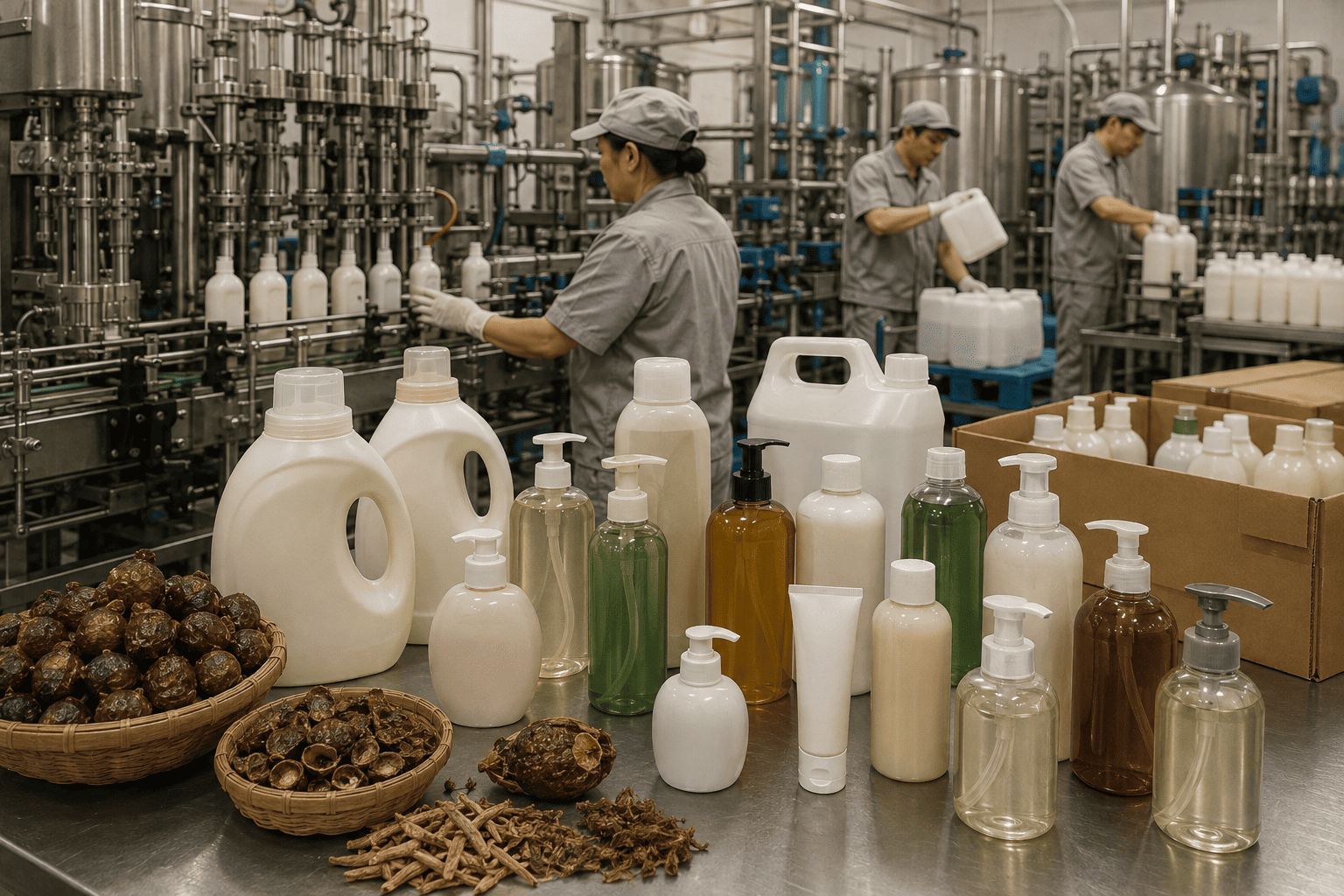
Soapberry Care manufactures soapberry-based laundry detergent, baby laundry detergent, underwear laundry detergent, shampoo, body wash, hair mask, dishwashing liquid, foaming hand wash, toothpaste, kitchen cleaning products, and other household cleaning items. OEM/ODM buyers can request customization for formula direction, fragrance, bottle type, capacity, label design, and carton packaging.
A multi-category factory can support line extension
I think one of Soapberry Care’s useful strengths is its ability to connect one core botanical concept with several finished product categories. This matters for importers, distributors, and private label owners who want a consistent plant-based brand story.
A buyer might start with one product, such as soapberry laundry detergent. If the test order performs well, the buyer may expand into:
- Baby laundry detergent
- Underwear laundry detergent
- Dishwashing liquid
- Foaming hand wash
- Shampoo
- Body wash
- Hair mask
- Kitchen cleaner
- Toothpaste
This creates a more complete retail shelf or e-commerce bundle. It can also improve container planning and reduce supplier management work.
Product categories and buyer use cases
| Category | Example Products | Typical B2B Buyer |
|---|---|---|
| Laundry care | Laundry detergent, baby laundry detergent, underwear detergent | Supermarket suppliers, distributors, online sellers |
| Hair care | Shampoo, hair mask | Private label personal care brands |
| Body and hand care | Body wash, foaming hand wash | Daily care product companies |
| Kitchen cleaning | Dishwashing liquid, kitchen cleaner | Household cleaning distributors |
| Oral care | Toothpaste | Brand owners needing plant-based positioning |
| Household cleaning | General cleaning products | Importers and wholesalers |
OEM vs. ODM: what buyers should clarify
Soapberry Care supports both OEM and ODM production. Buyers should understand the difference before contacting the factory.
OEM usually means the buyer has a clearer product direction or brand requirement. The factory manufactures according to agreed specifications.
ODM usually means the buyer needs more development support. The factory may help with product concept, formula direction, packaging, and sample adjustment.
In my experience, many buyers say “OEM” when they actually need ODM support. That can create delays. I would suggest using this simple checklist:
- Do I already have a formula direction?
- Do I already know the fragrance?
- Do I have packaging artwork?
- Do I know the bottle capacity?
- Do I know the target retail price?
- Do I have required label language?
- Do I know which documents my importer needs?
- Do I need mixed SKU trial orders?
If the answer is “no” to many of these questions, the project likely needs ODM-style support.
Mixed product trial orders can reduce risk
A buyer entering Southeast Asia or the Middle East may not know which product will sell best. A mixed product trial order can be useful. It lets the buyer test several SKUs before committing to a larger order.
For example, a distributor might test:
- 500 ml soapberry laundry detergent
- 1 L family laundry detergent
- Baby laundry detergent
- Dishwashing liquid
- Foaming hand wash
- Shampoo and body wash set
This approach gives the buyer market feedback. It also gives the factory practical feedback on fragrance, packaging, label style, and repeat order potential.
I would still recommend that buyers confirm minimum order quantity, sample cost, lead time, packaging availability, and export carton requirements before starting a mixed SKU project.
What Quality Control Support Can Soapberry Care Provide?
A product may look attractive in photos, but B2B buyers need more than appearance. Poor sealing, weak cartons, unclear labels, or missing documents can damage a shipment and create disputes. Soapberry Care’s quality control should be evaluated through raw material control, production inspection, packaging checks, and document preparation.
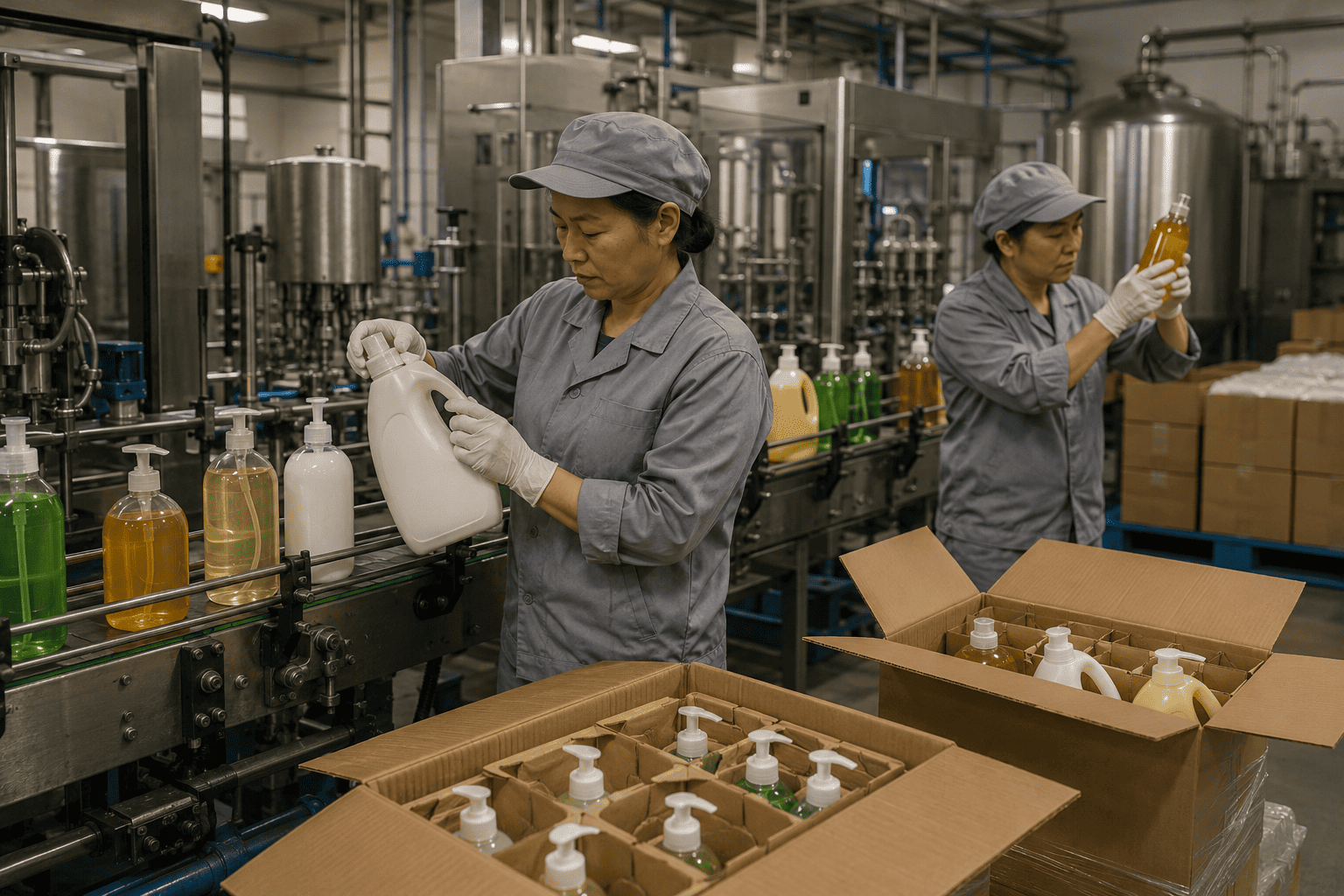
Soapberry Care supports quality control across soapberry raw materials, extract processing, formula blending, filling, sealing, labeling, packaging, and finished product inspection. It can prepare buyer-requested documents such as MSDS/SDS, COA, ingredient lists, product specification sheets, product photos, test reports, and category-specific safety or microbiological testing documents where required.
Quality control starts before filling
I do not see quality control as a final step only. It starts with raw material understanding and continues through the entire manufacturing flow. For soapberry-based products, raw material control is especially important because plant-derived ingredients may vary.
Soapberry Care’s quality control points include:
- Soapberry plant ingredient control
- Soapberry extract processing control
- Formula blending control
- Filling inspection
- Sealing inspection
- Label position inspection
- Carton strength review
- Product appearance checks
- Leakage prevention
- Finished product inspection before shipment
These points are practical. They are also the areas where many B2B disputes happen.
Documents buyers may request
Different markets and product categories may require different documents. Soapberry Care can prepare documents according to buyer requirements, but buyers should verify what their market requires before ordering.
| Document | Why Buyers Request It | Buyer Note |
|---|---|---|
| MSDS/SDS | Transport and safety reference | Confirm format needed by destination market |
| COA | Batch or product quality reference | Check which parameters are included |
| Ingredient list | Label and regulatory review | Have a qualified professional review it |
| Product specification sheet | Commercial and technical reference | Confirm size, appearance, fragrance, and packaging |
| Product photos | Listing, approval, and internal review | Request actual sample photos where possible |
| Test reports | Category-specific verification | Confirm lab type and test scope |
| Microbiological testing | Personal care product review | Often relevant for shampoo, body wash, hand wash |
| Heavy metal testing | Personal care and oral care review | Confirm local requirements |
| Basic chemical safety documents | Cleaning product transport and handling | Useful for laundry and kitchen cleaning products |
Personal care and household cleaning need different checks
A shampoo is not the same as a kitchen cleaner. Buyers should avoid using one document checklist for every SKU.
For personal care products, such as shampoo, body wash, hair mask, foaming hand wash, and toothpaste, buyers may need:
- Microbiological testing
- Heavy metal testing
- Ingredient list review
- Label claim review
- Product specification sheet
- Packaging compatibility checks
For household cleaning products, such as laundry detergent, baby laundry detergent, dishwashing liquid, and kitchen cleaner, buyers may need:
- Basic chemical safety information
- Transport-related documents
- Packaging leakage checks
- Product appearance checks
- Carton strength inspection
- Label language confirmation
I would strongly advise buyers to consult a qualified regulatory or import professional for application-specific decisions. A factory can support documents, but the importer usually carries responsibility for local compliance.
Packaging inspection is not a small detail
Packaging failures can ruin an otherwise acceptable product. Liquid products are especially sensitive during export shipping. A bottle that looks fine on a sample table may leak after stacking, vibration, temperature change, or long-distance transport.
Before bulk production, I would ask about:
- Bottle material
- Cap or pump compatibility
- Sealing method
- Label adhesion
- Carton thickness
- Inner packing method
- Drop or leakage test options
- Palletizing requirements
- Container loading plan
- Destination climate considerations
This is not overthinking. It is basic commercial risk control. Soapberry Care’s ability to inspect bottle sealing, label position, carton strength, product appearance, and leakage prevention gives buyers a clearer basis for supplier evaluation.
How Should Buyers Work With Soapberry Care on Customization and Trial Orders?
A buyer may like the product concept but still fail during commercialization. The problem is often unclear customization planning. If fragrance, capacity, label language, bottle type, and carton design are decided too late, the project can become slow and confusing. Soapberry Care is most useful when buyers provide clear market direction early.
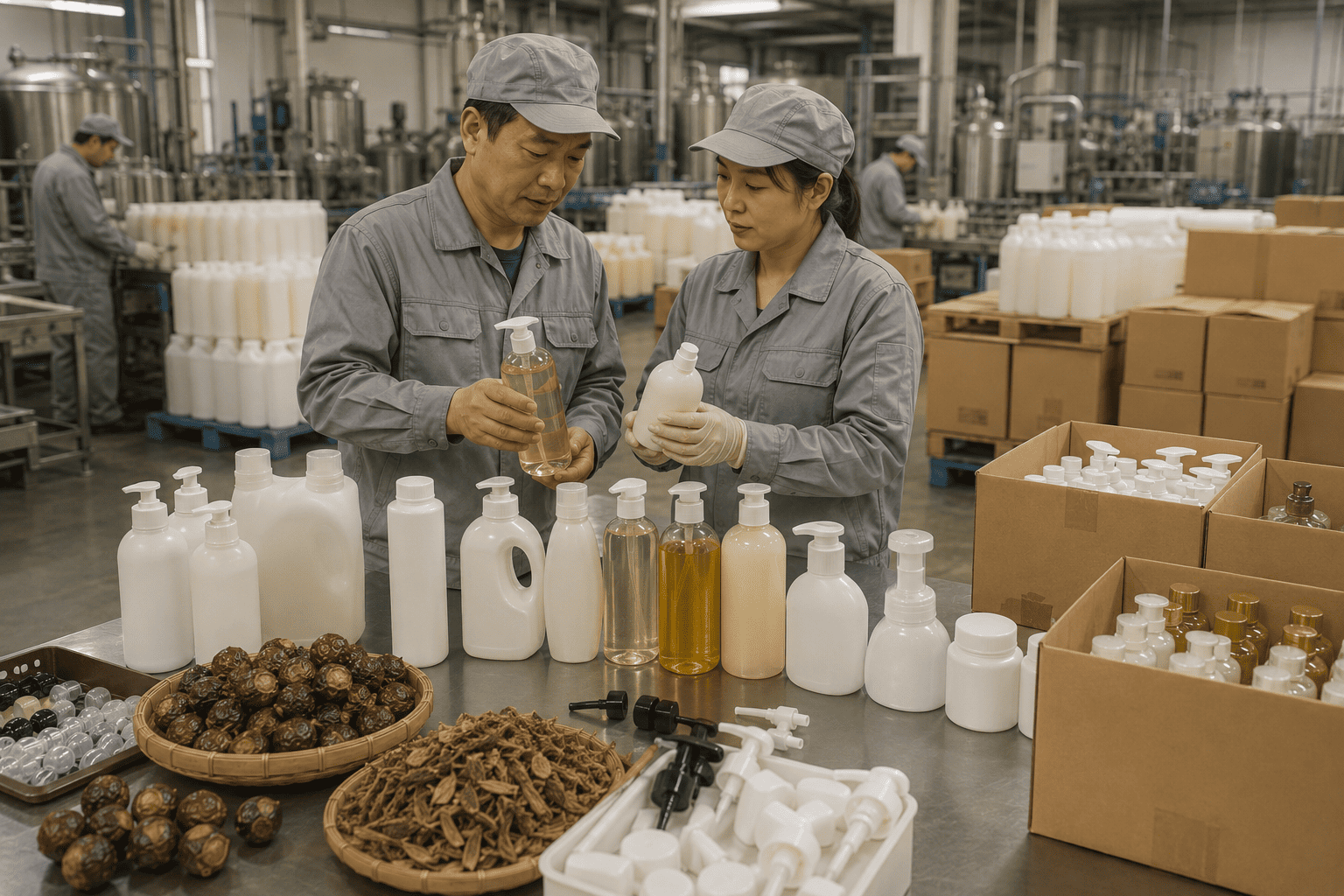
Buyers can work with Soapberry Care by starting with sample testing, defining product category and positioning, selecting formula direction, fragrance, bottle size, label language, packaging style, and carton requirements, then moving to mixed SKU trial orders or bulk OEM/ODM production after evaluation. Clear briefs help reduce delays and improve product fit.
A clear buyer brief saves time
When I speak with buyers, I prefer practical details over general enthusiasm. “I want natural products” is a starting point, not a production brief. Soapberry Care can customize many elements, but the buyer should guide the market direction.
A strong brief may include:
- Target market: Malaysia, Thailand, UAE, Saudi Arabia, Qatar, etc.
- Sales channel: supermarket, distributor, e-commerce, wholesale, salon, home care store
- Product category: laundry, baby laundry, shampoo, dishwashing liquid, kitchen cleaner
- Bottle size: 250 ml, 500 ml, 1 L, or other capacity
- Fragrance direction: fresh, herbal, floral, unscented-style positioning, or custom
- Label language: English, Arabic, Thai, Vietnamese, Bahasa, or bilingual
- Brand level: economy, mid-range, family care, premium botanical
- Carton requirements: private label carton, export carton, mixed SKU carton
- Documents needed: SDS, COA, ingredient list, test reports, photos
- Trial order plan: single SKU or mixed SKU
This information helps Soapberry Care recommend a more suitable solution.
Customization areas
| Customization Area | Options Buyers May Discuss | Why It Matters |
|---|---|---|
| Formula direction | Laundry, baby laundry, hair care, dishwashing, kitchen cleaning | Product must match use case |
| Fragrance | Market-specific scent direction | Scent affects repeat purchase |
| Bottle type | Pump, flip cap, standard cap, squeeze bottle | User experience and leakage risk |
| Capacity | Small trial size or family size | Retail price and shipping cost |
| Label design | Private label, local language, OEM packaging | Market entry and shelf appeal |
| Carton design | Export carton, branded carton, mixed SKU carton | Shipment safety and distribution |
| Product positioning | Plant-based, family care, baby laundry, kitchen care | Helps retailers understand the line |
Southeast Asia and Middle East market planning
Soapberry Care is preparing to develop international export business and gives priority to Southeast Asia and the Middle East. These regions can be suitable for plant-based daily care and household cleaning concepts, but buyers should still test products locally.
Recommended target markets include:
- Malaysia
- Thailand
- The Philippines
- Indonesia
- Vietnam
- United Arab Emirates
- Saudi Arabia
- Qatar
- Kuwait
- Oman
I would not assume that one formula, one fragrance, or one label style fits every country. For example, an e-commerce seller in the UAE may prefer different packaging from a supermarket supplier in Vietnam. A distributor in Malaysia may need bilingual labeling. A wholesaler in Saudi Arabia may care more about carton strength and Arabic label support.
Trial orders before bulk production
Trial orders are useful because they turn assumptions into data. A buyer can test product appearance, fragrance acceptance, packaging durability, shipping condition, online listing response, and distributor feedback.
A practical trial order process may look like this:
- Buyer sends product brief.
- Soapberry Care confirms available options.
- Samples are produced or selected.
- Buyer tests product and packaging.
- Label and document needs are reviewed.
- Trial order SKUs are confirmed.
- Factory produces and inspects goods.
- Buyer evaluates market feedback.
- Bulk order plan is adjusted.
This staged approach protects both sides. The buyer reduces product launch risk. The factory receives clearer feedback before large-scale production.
Questions I would ask before confirming an order
Before I placed an OEM/ODM order with any plant-based supplier, I would ask:
- Can you explain the soapberry processing workflow?
- Which products are already within your manufacturing range?
- Can you support sample testing?
- Can you support mixed SKU trial orders?
- What customization options are available?
- Which documents can you prepare?
- How do you inspect bottle sealing and cartons?
- Can labels be adjusted for my market?
- What is the expected lead time?
- What details do you need from me before quoting?
These questions keep the discussion focused on execution, not just marketing.
Frequently Asked Questions
What is Soapberry Care?
Soapberry Care is a Shandong-based manufacturer of soapberry plant-based washing, personal care, and household cleaning products. The factory has 8 years of manufacturing experience, an 86-person team, and capabilities covering soapberry extract processing, formulation, filling, packaging, inspection, OEM/ODM customization, and sample support.
What products does Soapberry Care manufacture?
Soapberry Care manufactures laundry detergent, baby laundry detergent, underwear laundry detergent, shampoo, body wash, hair mask, dishwashing liquid, foaming hand wash, toothpaste, kitchen cleaning products, and household cleaning products. The company focuses on soapberry extract and plant-based daily care product concepts.
Can Soapberry Care support private label products?
Yes. Soapberry Care can support OEM/ODM private label development for importers, distributors, wholesalers, supermarket suppliers, e-commerce sellers, and daily care brands. Buyers can discuss formula direction, fragrance, bottle type, capacity, label design, local language labels, carton packaging, samples, and trial orders.
What documents can buyers request from Soapberry Care?
Buyers can request documents such as MSDS/SDS, COA, ingredient list, product specification sheet, product photos, and test reports. For personal care products, microbiological and heavy metal testing may be prepared according to market requirements. Buyers should verify local compliance needs with qualified professionals.
Is soapberry extract the only factor that determines product quality?
No. Soapberry extract is an important ingredient concept, but finished product quality also depends on formula direction, production control, filling, sealing, packaging, label accuracy, inspection, and category-specific testing. Buyers should evaluate the full manufacturing process before choosing a soapberry-based supplier.
Conclusion
Soapberry Care should be understood as more than a soapberry extract supplier. I see its value in the full path from soapberry plant processing to finished laundry, personal care, oral care, kitchen cleaning, and household cleaning products. For B2B buyers, the key is to evaluate manufacturing control, customization, quality checks, documents, samples, and trial order support. If you are sourcing soapberry-based OEM/ODM products for Southeast Asia, the Middle East, or another market, contact Soapberry Care to discuss samples, packaging, and private label development.